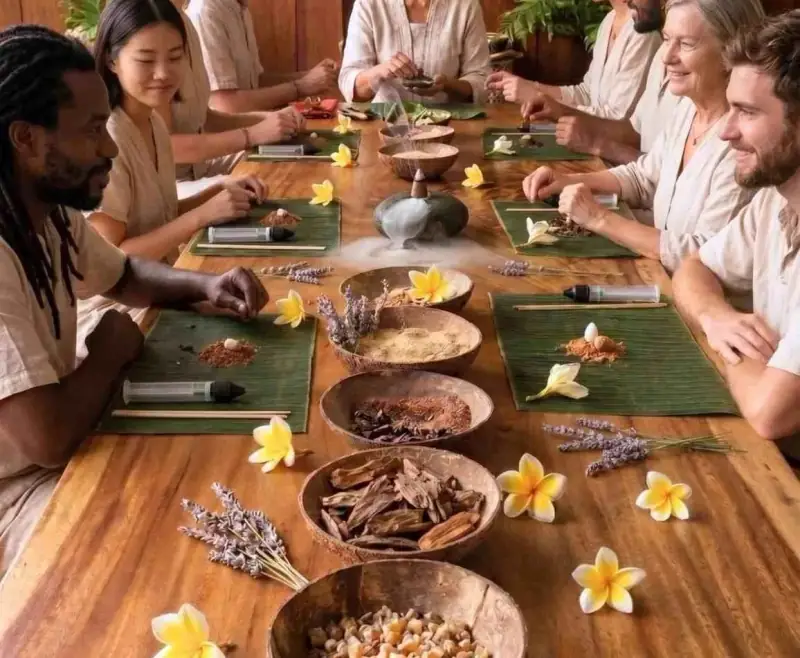
Real incense is not made in a chemical lab. It is milled from raw nature.
We do not buy synthetic fragrance oils, blank industrial sticks, or pre-diluted chemical fillers. Every wood, resin, flower, and binder in our atelier is sourced through trusted Indonesian suppliers, dried, ground, sifted, and formula-tested by hand.
Here is how raw botanicals become Sacred Smoke.
The unspoken problem
Most commercial incense is built backwards.
Most incense sold globally is an industrial byproduct. Mass manufacturers take sawdust or cheap coal dust, roll it onto wooden splints, and dip the finished blanks into synthetic fragrance oils suspended in solvents like dipropylene glycol.
When burned, those chemical compounds can combust into acrid smoke, leaving harsh residue and causing headaches.
At Sacred Smoke, we reject shortcuts.
We work strictly with whole botanical materials. The color of our dough comes from the natural pigments of wood and flora. The aroma comes from volatile plant oils held inside raw plant tissue. The combustion engine is provided by aromatic barks and woods.
The four botanical pillars
Every formula depends on balance.
Every Sacred Smoke formula relies on four botanical categories, carefully balanced for scent harmony and clean combustion.
CategoryRaw material examplesRole in the formulaProcessing standard
1. Base Woods
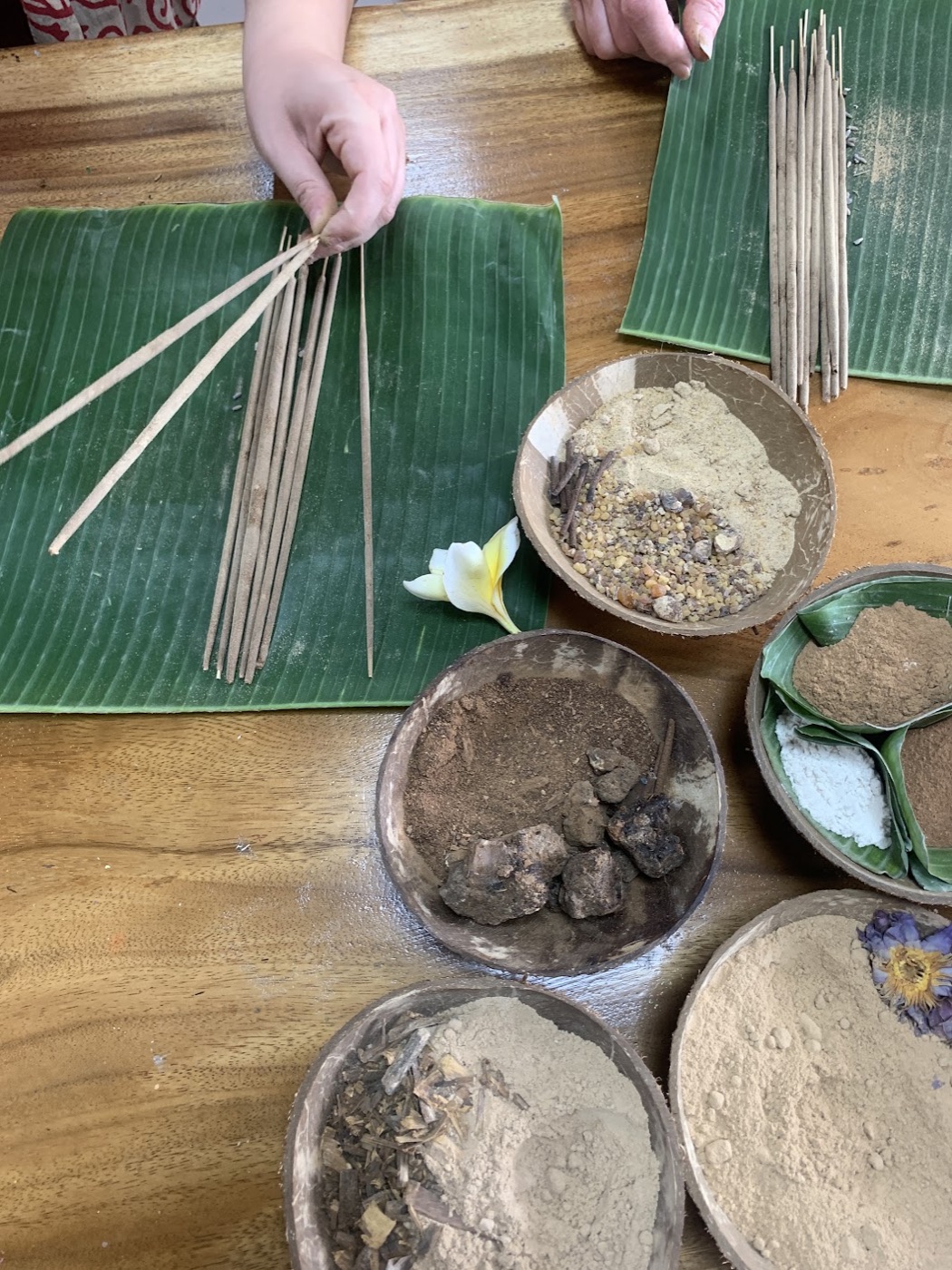
Indonesian sandalwood, Indonesian agarwood, Indian red sandalwood, black gaharu
Forms the physical body and provides the steady combustible engine for the ember.
Slow-milled to fine timber dust to preserve natural resin glands without heat degradation.
2. Heart Botanicals
Jasmine, rose, Darshan blend, Tibetan Masala spices
Delivers distinct character, emotional resonance, and aromatic mid-notes.
Dehydrated at low temperatures and sifted through fine mesh for clean burning.
3. Natural Resins
Frankincense, White Royal Hojari, Green Royal Hojari, myrrh, Dragon's Blood
Adds balsamic depth, smoke density, and lingering top notes.
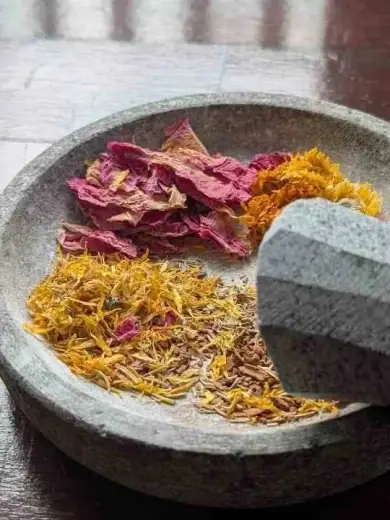
Ground by hand with pestle and mortar to prevent friction heat and gummy buildup.
4. Natural Binders
Pure makko bark (Litsea glutinosa), wild laha
The water-activated botanical glue that binds dry powders into smooth dough.
Sourced from pure tree bark, completely water-soluble with neutral burn odor.
Note: raw harvest stock can fluctuate due to seasonal availability or supplier constraints. When our in-house base or heart powders run out, we use only high-grade, ethically sourced wood and floral powders from verified artisanal partners in Indonesia.
The Sacred Smoke process
How we turn raw materials into powder.
01
100% local Indonesian supplier sourcing
We partner with trusted Indonesian suppliers and sustainable harvesters who respect the lifecycle of aromatic timber and flora. From aged sandalwood and rare black gaharu to tropical blooms and aromatic resins, every batch enters our atelier as unadulterated plant tissue.
02
Curing and low-temperature dehydration
Fresh botanicals contain moisture that inhibits combustion and causes mold. By avoiding high-heat ovens, we prevent delicate volatile oils from evaporating before milling.
03
Pestle and mortar hand-grinding
Heat destroys natural aroma. We grind resins, including White Royal Hojari, Green Royal Hojari, myrrh, and Dragon's Blood, by hand using stone mortars and pestles so crystalline tears become fine dust without melting into paste.
04
Precision mesh sifting
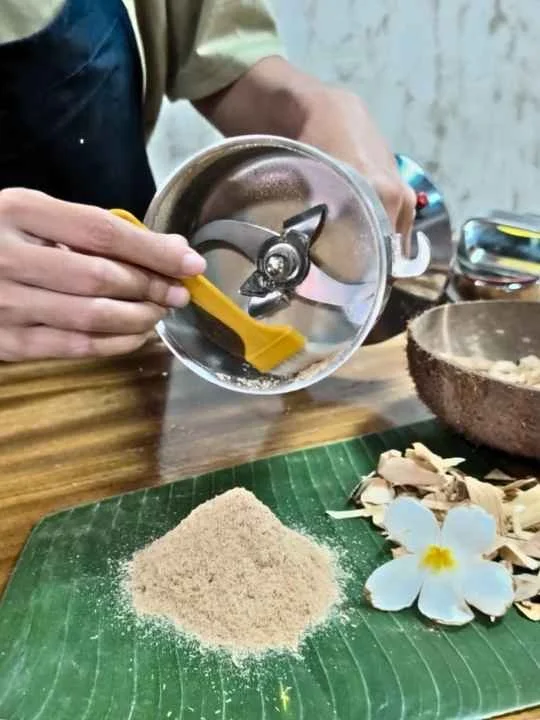
Particle size dictates burn behavior. Every batch passes through fine-mesh sieves so the finished botanical powder hydrates smoothly, rolls without cracking, and forms a solid ember line.
05
The smoke test
Before any powder batch enters our Ubud course or DIY kits, we burn a precise pinch of dry blend to evaluate scent evolution, smoke texture, ash quality, and combustion rate.
Particle size matters
The chemistry of combustion is not decorative.
Making incense is an exercise in physical chemistry. When dry powder meets water, the water-soluble starches inside the makko binder swell and form a sticky matrix around wood and resin particles.
If the particles are too large, the binder cannot bridge the gaps. That creates brittle dough and poor burn performance. Fine-mesh powder creates a dense, smooth dough every single time.
Coarse powder
Chunks create air gaps, uneven hydration, cracking, and sticks that go out.
Sacred Smoke fine-mesh powder
Silky uniform dust absorbs water completely and creates a smooth, steady burn.
FAQ
Frequently Asked Questions About Our Ingredients
Do you use artificial dyes or colorants to make your powders look bright?+
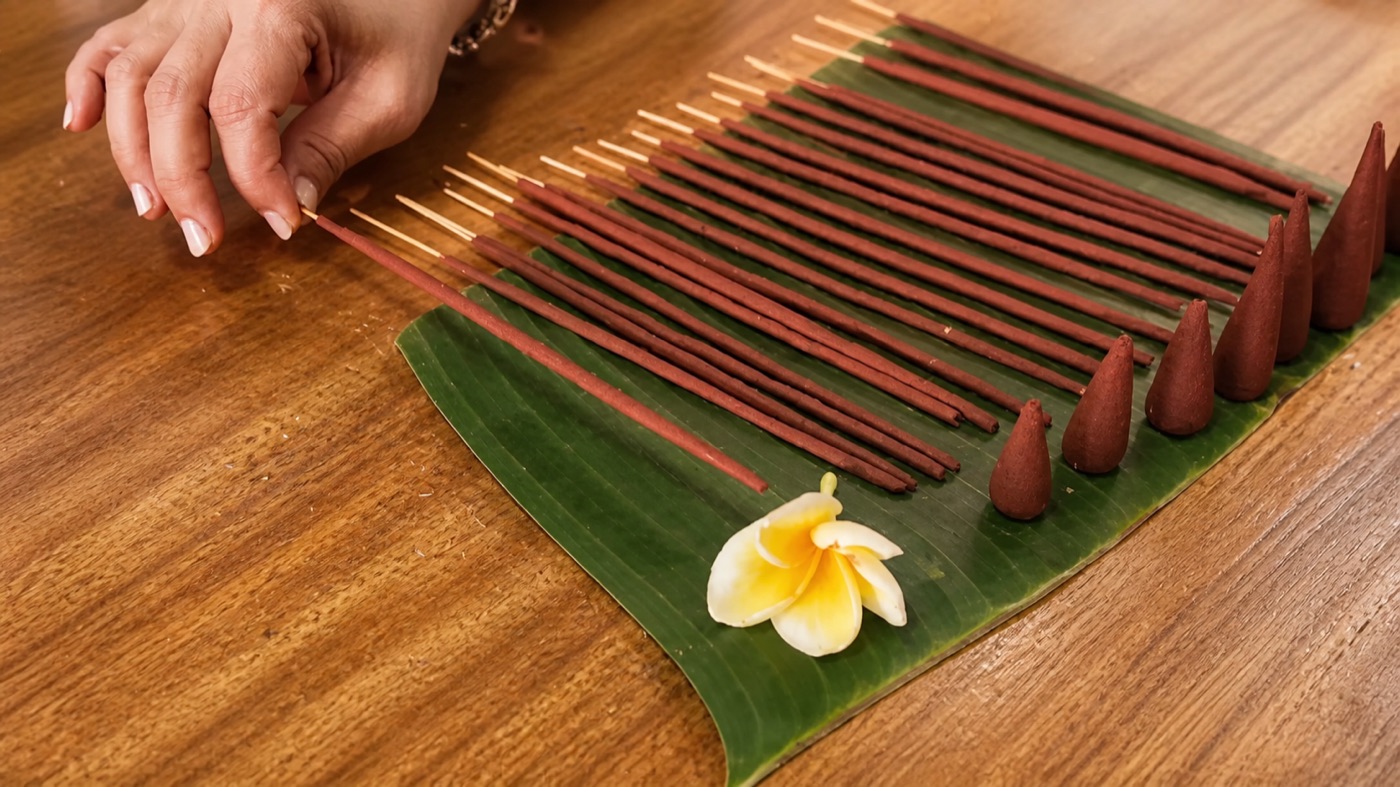
Never. The terracotta crimson of our Rosha blend comes from pure Indian red sandalwood and ground rose petals. The matte black of our Purba blend comes from high-purity natural charcoal and black agarwood. We use zero artificial dyes or mineral pigments.
Why do you use makko powder as a binder instead of synthetic glues?+
Makko is the ground inner bark of the Litsea glutinosa tree. It is natural, water-soluble, and virtually odorless when burned. Synthetic glues and chemical binders produce harsher smoke; makko lets the botanicals speak.
Where do you source your ingredients?+
We source our raw botanical ingredients through trusted Indonesian suppliers whenever possible. That keeps the materials fresh, supports local timber and agricultural communities, and lets us inspect sandalwood, gaharu, flora, and resins closely.
Why do you hand-grind your resins with a pestle and mortar?+
Resins like Royal Hojari frankincense, myrrh, and Dragon's Blood contain low-melting-point tree sap. Mechanical blades generate heat that can turn resin into a gummy clump. Hand-milling keeps the material cool.
Practice the craft
Work with the same botanical logic at home or in the atelier.